GEO / AEO
When your customers ask AI, the source it cites should be your website
More and more people ask ChatGPT, Gemini or Perplexity instead of searching Google. Those assistants read websites and name their sources. We get your site ready to be one of them: readable, citable and open to AI crawlers by explicit permission.
GEO and AEO: optimization for generative engines (the ones that write the answer) and for answer engines (the ones that answer the question without a list of results).
Traffic from AI is already here
This isn’t a prediction for two years from now. It’s already in the analytics of sites we manage today.
People no longer just type into Google. They ask an assistant: “who sells this in Querétaro?”, “which company does this?”, “compare these two options for me”. The assistant reads websites, puts the answer together and names the sources it used. There are no ten positions to compete for: either you’re one of the sources it cites, or you don’t exist in that conversation.
What’s different from Google is how they reach you. An assistant arrives with its own crawler: it has to get past your robots.txt, understand what each page is about and know who you are. If your site makes that hard, it cites someone else, even if your offer is better.
OUR OWN EVIDENCE · GA4
Top source
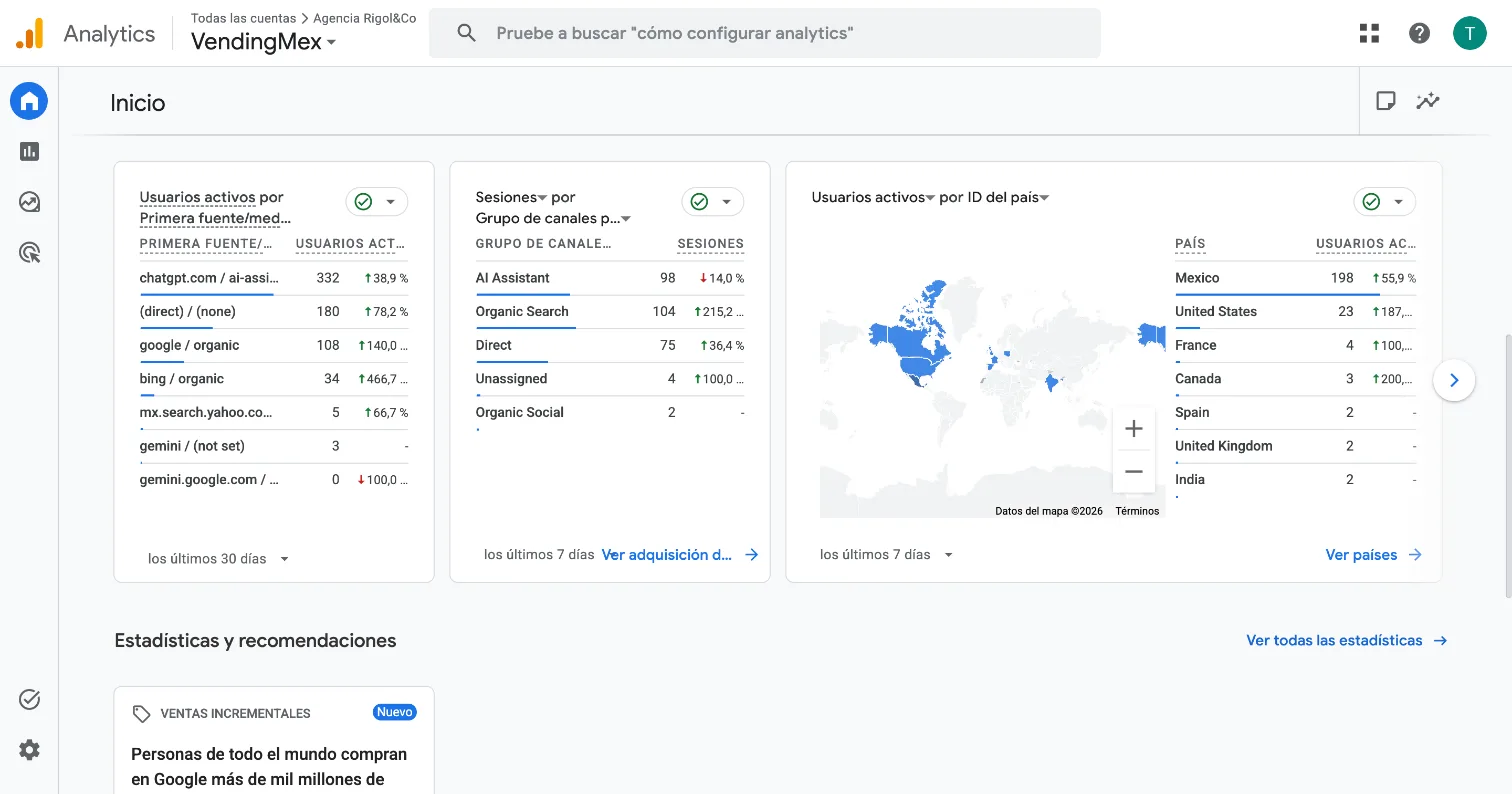
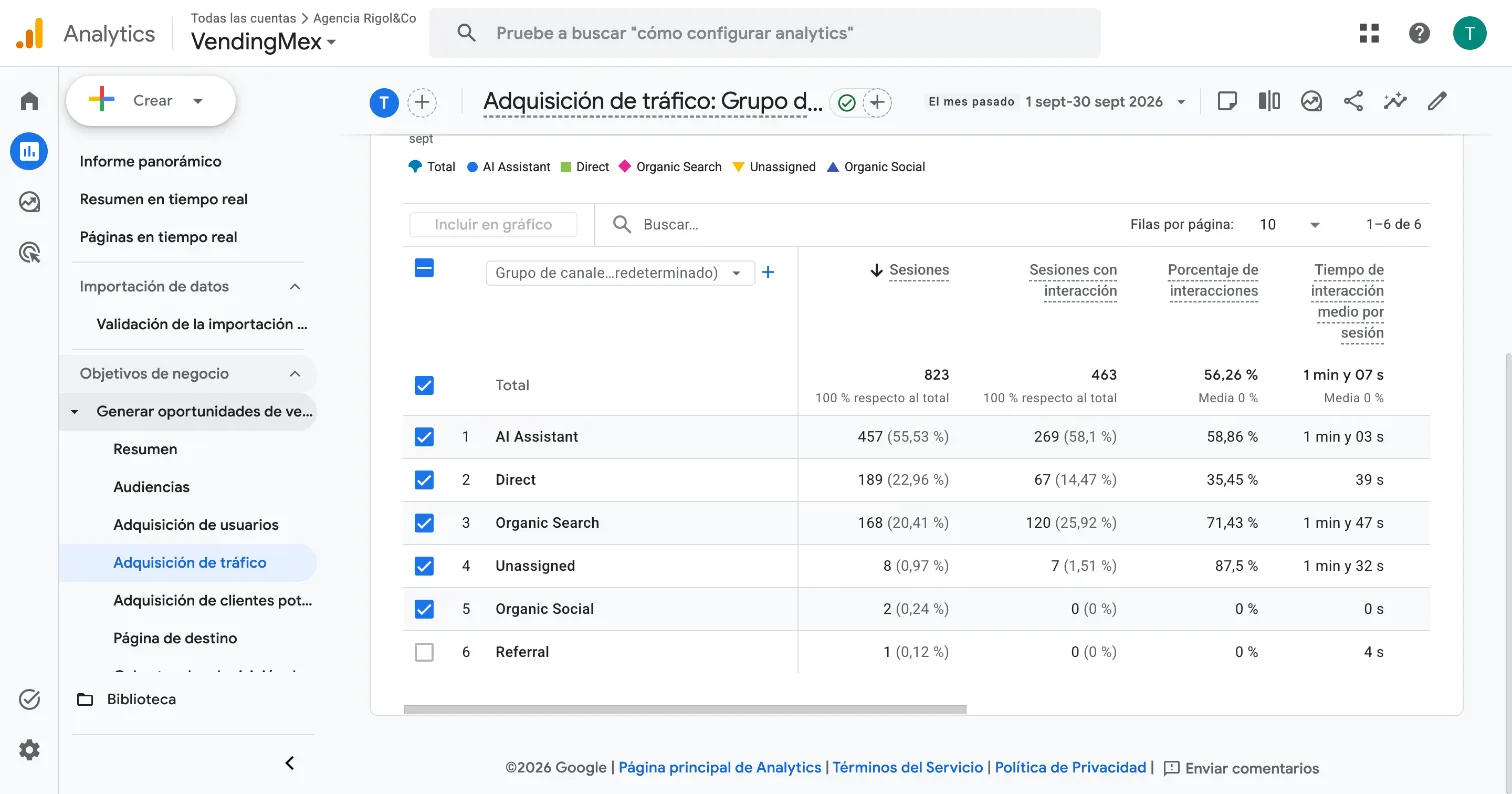
On vendingmex.com, chatgpt.com is the top source of users over the last 30 days: 332 users, against 108 from organic Google. In September the “AI Assistant” channel was 56% of sessions: 457 of 823.
The screenshots, unedited
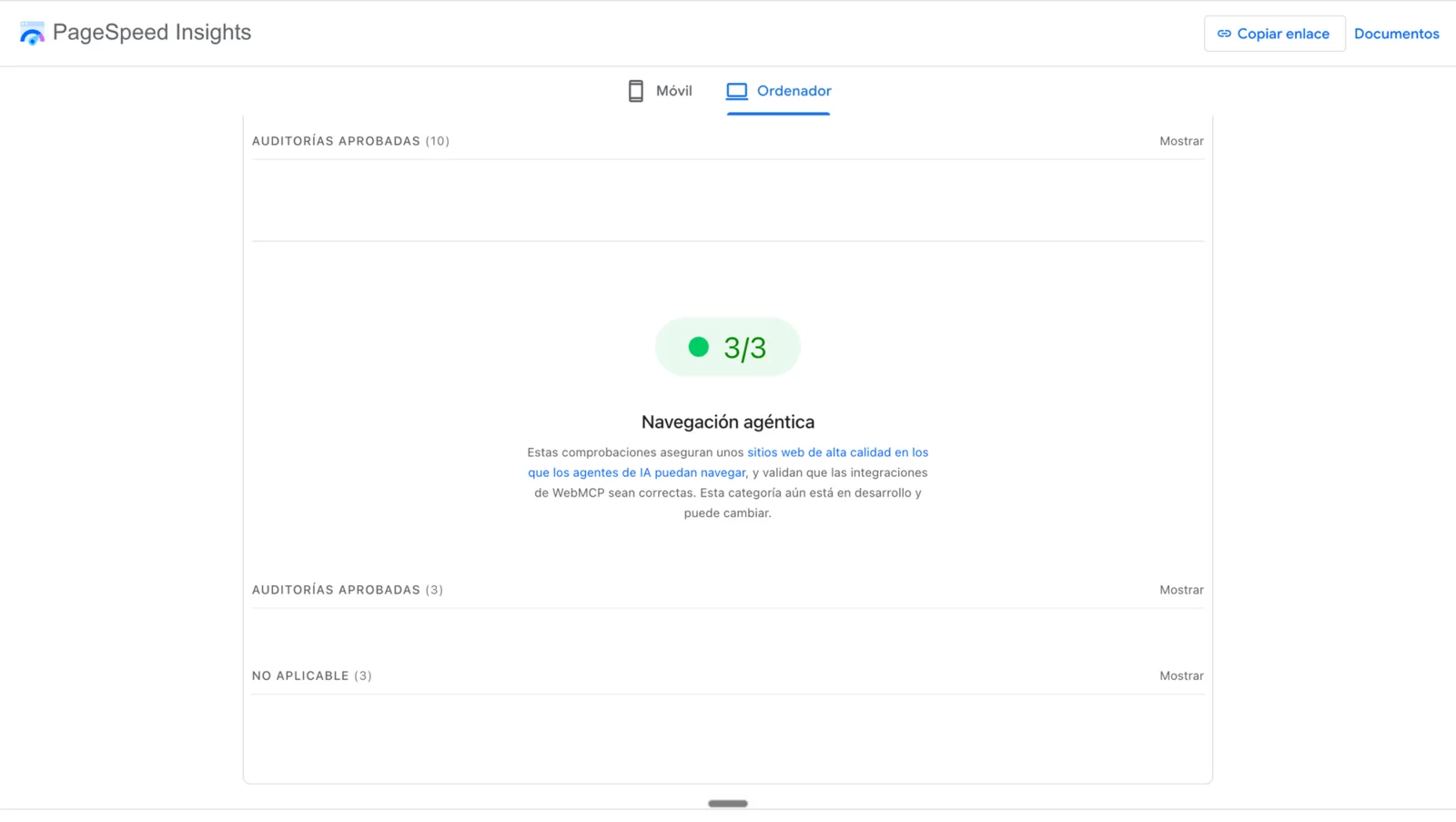
The figures on this page come from these screens. Grupo CerVel, Congenius, VendingMex and Claudio Cerón gave us permission to publish them. See the full VendingMex case study.
SEO PLANS · GEO INCLUDED
Choose how fast you want to grow.
A monthly subscription with no minimum term. More articles a month means more searches covered and faster results. Every plan includes an executive report. We work on a website we build in Astro: if yours runs on WordPress or another platform, we migrate it without losing rankings. The website setup is quoted separately.
If we already run your website, your monthly plan is also your SEO plan: Content, Full and Maximum are the same plans under Web design and under SEO.
Content
- Technical upkeep: 24/7 monitoring, updates, SSL, domain and sitemap
- 3 SEO articles a month (800–1500 words, with keyword research for your industry)
- Article schema and meta tags on every post
- Strategic internal links to your key landing pages
- Monthly optimization based on real Search Console data
- Core Web Vitals tracking
- Monthly executive report (impressions, clicks, rankings and next month’s plan)
Full
- Technical upkeep: 24/7 monitoring, updates, SSL, domain and sitemap
- 6 SEO articles a month (twice the volume)
- Article schema and meta tags on every post
- Strategic internal links to your key landing pages
- Monthly optimization based on real Search Console data
- Core Web Vitals tracking
- Minor changes included
- Editorial calendar (quarterly keyword plan)
- Ongoing, proactive technical SEO (monthly competitor analysis)
- Monthly strategy meeting (30–45 min video call)
- Executive report and a prioritized monthly plan
Maximum
- Technical upkeep: 24/7 monitoring, updates, SSL, domain and sitemap
- 10 SEO articles a month
- Article schema and meta tags on every post
- Strategic internal links to your key landing pages
- Monthly optimization based on real Search Console data
- Core Web Vitals tracking
- Minor changes included
- Editorial calendar (quarterly keyword plan)
- Ongoing, proactive technical SEO (monthly competitor analysis)
- Strategy meeting every two weeks
- Monthly executive SEO report (metrics and prioritized recommendations)
- Priority on changes and support
Prices exclude 16% VAT (IVA). No minimum term.
The same plans as on the SEO page, where you’ll find everything each one covers. The GEO/AEO work is part of whichever plan you choose; it isn’t billed separately.
WHAT DOES IT COST?
It isn’t billed separately: it’s included
GEO/AEO optimization is included in our SEO plans and in every new website we build. It isn’t an add-on or an extra line in the quote: it’s how we build websites and how we work on content.
The plans above are the monthly ones, with their prices. Whichever you choose includes the GEO work described on this page, at no extra cost.
Where it’s included
SEO plans: the GEO work is part of the monthly plan.
New websites: every piece is in place from day one.
ANATOMY OF A WEBSITE AI CAN CITE
How we do it: a website AI models can read and cite
Six pieces our websites include as standard. None of them is a trick: they’re standard ways of telling a machine what’s on the site and what it may do with it.
01
A robots.txt that welcomes AI
Explicit permission for 15 AI crawlers (OpenAI’s GPTBot and OAI-SearchBot, Anthropic’s ClaudeBot, PerplexityBot, Google-Extended, Amazonbot, Applebot-Extended, Meta-ExternalAgent and more), plus Content Signals declaring what the content may be used for: ai-train, search, ai-input.
Access and usage declared, not left to chance
02
llms.txt
An index of the site written for language models, following the llmstxt.org standard: which pages exist, what each one covers and where to find it. It’s regenerated on every build with every page and the whole blog, so it never goes out of date.
Regenerated on every publish
03
Markdown for agents
Every page has a Markdown twin: the same text, without menus, forms or clutter. When an AI agent requests the page in Markdown (the Accept: text/markdown header), that’s what it gets. A person’s browser still gets the usual HTML.
On rigolco.com: more than 130 twins
04
Discovery headers
An HTTP Link header that tells agents where the llms.txt and the sitemap are. The agent doesn’t have to guess or crawl blind: the server’s very first response points the way.
llms.txt and sitemap, announced up front
05
schema.org structured data
Who the business is, in a format machines read without ambiguity: LocalBusiness/Organization with address, opening hours and service area, FAQPage on landing pages and BlogPosting on articles.
The profile search engines and models read
06
The usual foundations
Semantic HTML, a sitemap, RSS and a fast site, with performance budgets checked on every build. GEO rests on technical SEO; it doesn’t replace it.
No healthy site, no GEO
CONTINUOUS AUDITING
An agent of ours reviews every site, and then reviews it again
We built our own agent that runs every site we manage through Cloudflare’s agent-readiness test (isitagentready.com) and adds our own checks: that the llms.txt exists and its links work, that the 15 AI crawlers can actually get in (tested by visiting with their User-Agent, not by reading the robots.txt), and that no header is blocking them by mistake.
01
Scan
The agent crawls the site the way an AI crawler would.
02
Report per site
Which check fails, why, and what needs to change. No score without an explanation.
03
Fixes
We make them ourselves in the site’s code, reviewed before publishing.
04
Re-verification
After publishing, the test runs again. If the score doesn’t go up, it isn’t fixed.
Real progression · August 2026
Before
Level 1 · Basic Web Presence
Today
Level 3 · Agent-Readable
All 9 sites we manage made that jump. rigolco.com scores 100/100 (level 5, “Agent-Native”) on the 7 checks that apply to business websites.
Agent-readiness test · rigolco.com
Cloudflare
100/100
Level 5 · “Agent-Native”
7 applicable checks, 7 passed
AI CRAWLERS WITH PERMISSION
15 AI crawlers allowed in the robots.txt, with Content Signals declaring the permitted use.
What we don’t do
No tricks to fool the model
No hidden instructions, no invisible text to manipulate the answer. It’s fragile, it gets caught, and it damages the very site it’s meant to help.
No cloaking
The Markdown we serve to agents is the same content a person reads in the HTML. The format changes; the message doesn’t.
No blocking AI, and no giving everything away
We don’t shut the door, and we don’t leave it wide open either: with Content Signals we declare what the content may be used for (training, search, context for answers) and what it may not.
No selling GEO as a magic add-on
Without a healthy site underneath (fast, well structured, with content that genuinely answers questions), no amount of GEO will help. That’s why it goes alongside SEO, not instead of it.
Frequently asked questions about GEO/AEO
Before choosing a plan, see where your website stands today
The free website audit includes an agent-readiness check of your current site: what it needs so AI can read it and cite you. Delivered in 24 h over WhatsApp.
Data from Google Analytics 4 (vendingmex.com, screenshots taken on October 5, 2026) and from Google Search Console (grupocervel.com and congenius.com.mx) and Bing Webmaster Tools (cervel.net and congenius.com.mx), last 3 months, published with the permission of VendingMex, Grupo CerVel, Congenius and Claudio Cerón; and from Cloudflare’s agent-readiness test at isitagentready.com and PageSpeed Insights, both for rigolco.com. The level progression covers the 9 websites we manage, measured in August 2026.